crafty times
Post-graduation healing
Coming!
Perks of integrating your hobbies into your research
I have always been into drawing and painting, in a very old-school way. Time has changed, and technology is everywhere now. This was just before the popular era of AI (or maybe I was simply unaware of the recent advancements) and after the traditional pen-and-paper days.
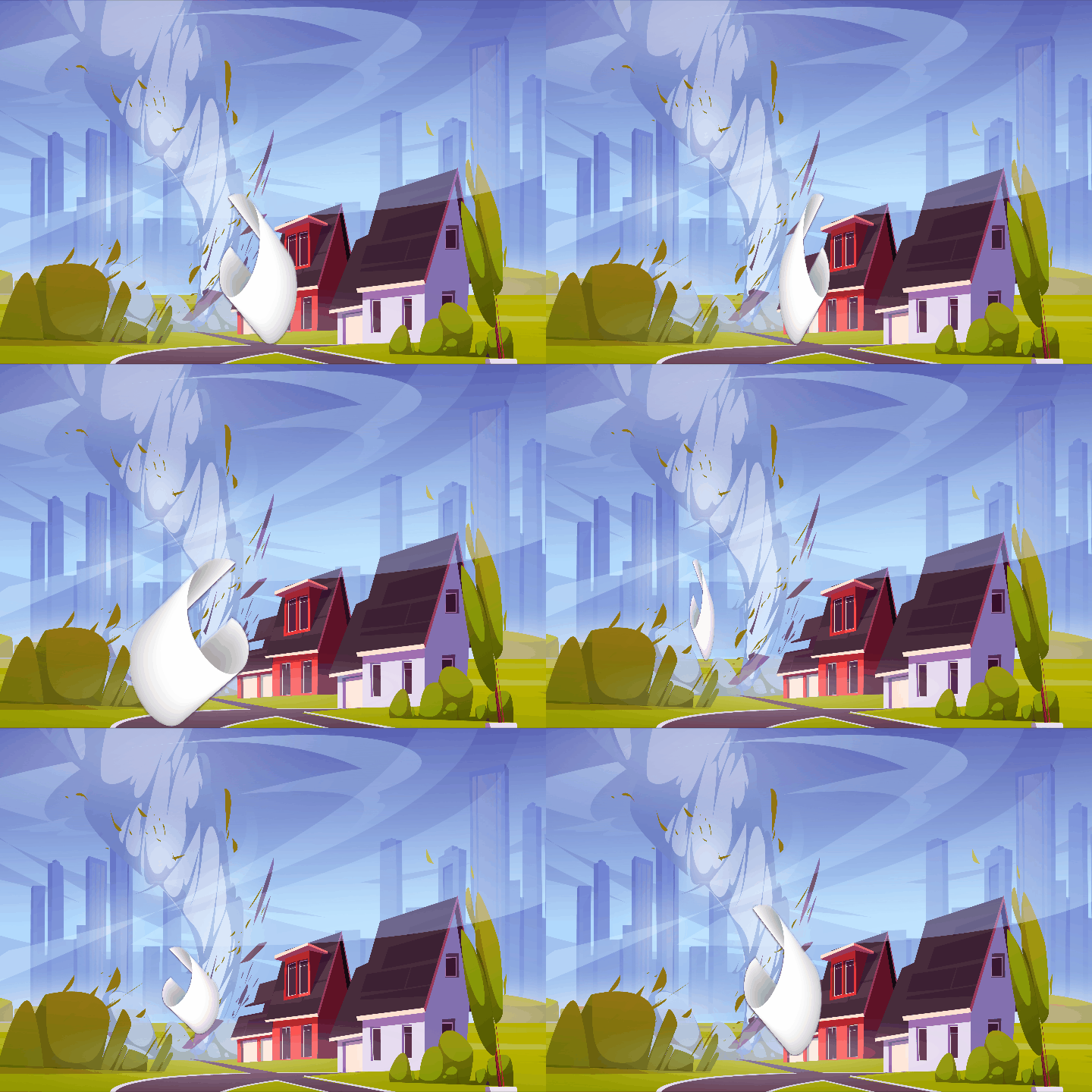
So for my experiments, I started creating GIFs from scratch (I still do not know how to pronounce that word). I learned how to make animations by placing images next to each other and moving things inch by inch, frame by frame. To many people, this might seem like a waste of time. I disagree. It was one of the rare periods in my research when I enjoyed my time without feeling guilty.
My only complaint is that some people thought they were AI-generated. That broke my heart 🥲.
They may look unprofessional, strange, or even ugly, but they are all my babies.
Accepting imperfections
I still do not know the formal definition of perfectionism, but lately I have been realizing that it does not necessarily lead to perfect outcomes. More often, it eats away at the joy of creating because you expect yourself to do everything flawlessly. And sometimes the result is not doing anything at all.
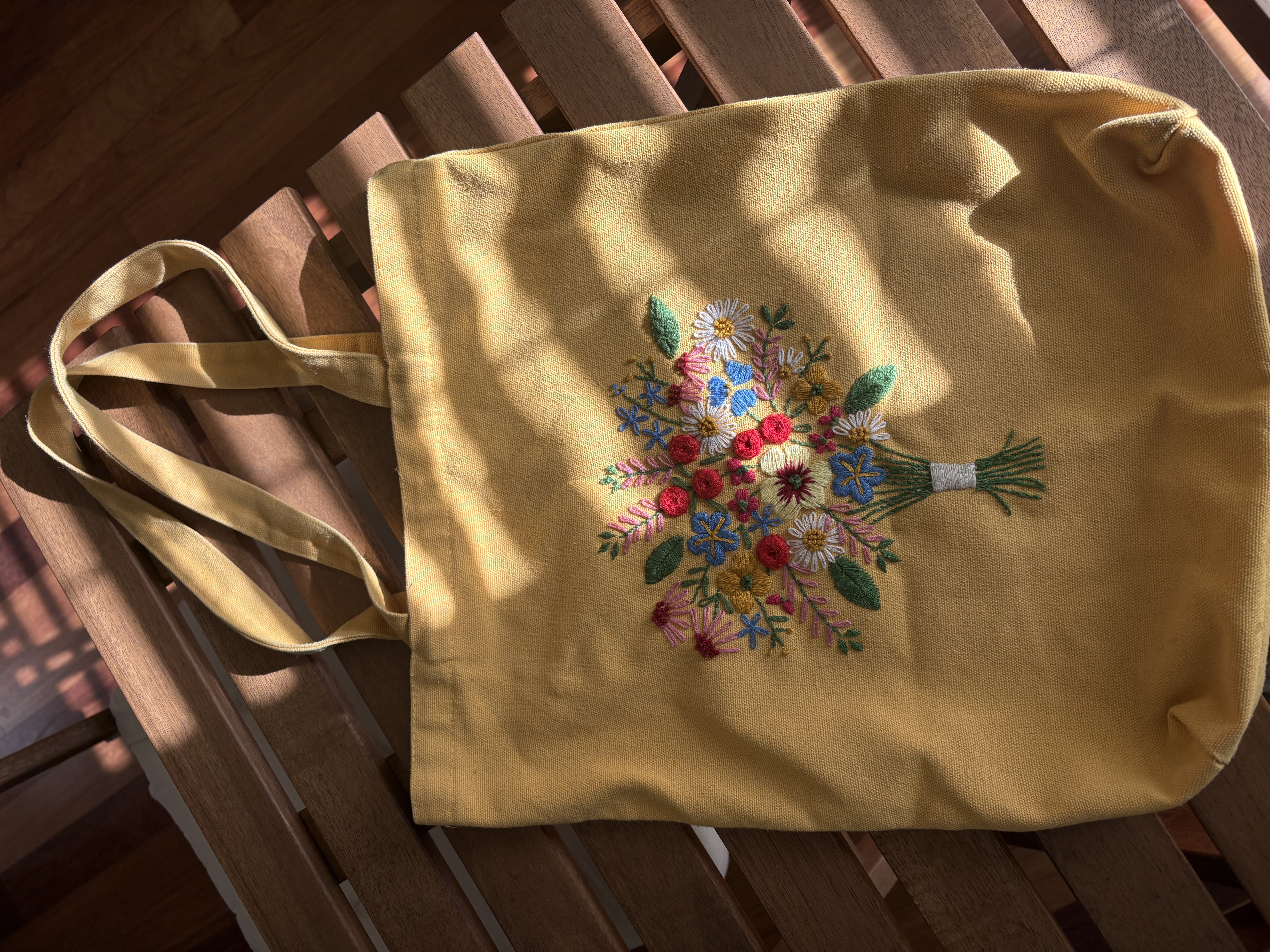
Every stitch on this tiny yellow bag is the result of doing and undoing, starting over, feeling dissatisfied, and wanting to give up. Is it flawless now? No. Is it exactly what I had in mind? No. Could I have done better? Probably not, at least not with the skills and patience I had at that moment. Maybe part of growing up is learning to accept ourselves as we are instead of constantly measuring ourselves against impossible standards. It would be nice to understand where these feelings come from, but the current state of my mental health is not particularly helpful in answering that question. For now, perhaps it is enough to accept that something can be imperfect and still be worth making.
Sending my love to my mom, who taught me these embroidery techniques many years ago.
What is art
For a long time, I thought art meant creating something that did not exist before. Perhaps because of that belief, realism never felt like the ultimate form of art to me. If the goal was simply to reproduce what was already there, where was the creativity? As a teenager, I spent a lot of time looking for artistic talent in myself. I painted still lifes and practiced music, where I was quite successful. Surprise surprise: I even won several awards for my paintings and gave a number of solo concerts. Yet I often felt like an impostor since I was not creating at all. At thirteen, I convinced myself that I was merely copying what I saw rather than creating something new. At seventeen, I gave up my music studies because I felt I could only play the notes on the page. Technically correct, perhaps. But without a soul of my own.
Looking back, I think I had a very narrow understanding of creativity. I believed that originality was the only thing that mattered. If I could not invent something entirely new, then I was not an artist. These days, I am more comfortable with copying. My little yellow bag, for example, was made from a pattern. It is not my design. Yet every stitch reflects my time, patience, frustration, and persistence. The object may not be original, but the experience of making it is entirely mine.
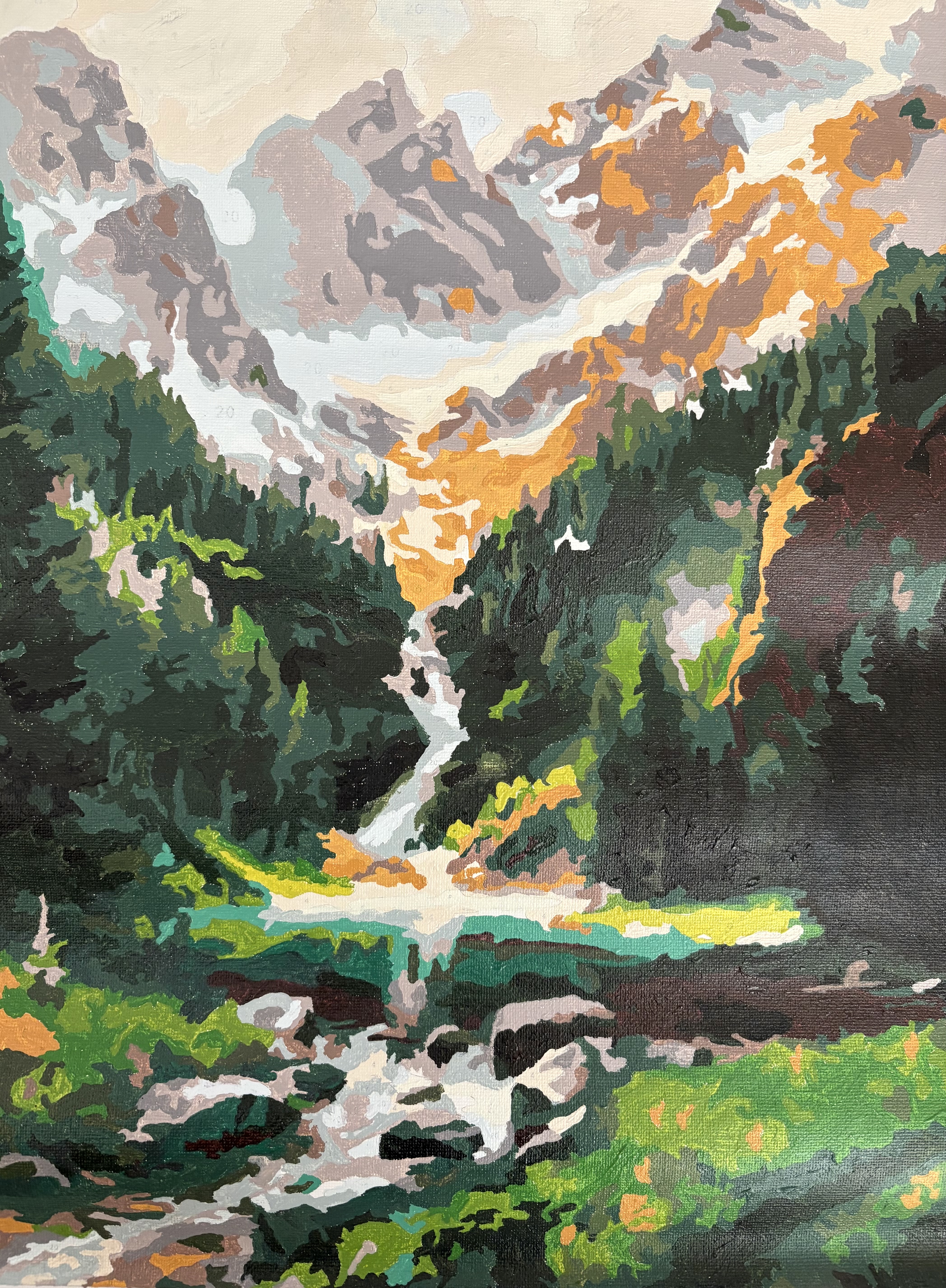
The same is true for paint-by-number kits. No need for creativity in choosing the colors. The decisions have already been made. Yet the sheer truth is that I enjoy the process immensely. I like filling in the spaces, watching the image slowly emerge, and allowing myself to focus on something simple without using too many brain cells or too much glucose. I am still not sure whether I believe in art for art's sake or art for people. What I do know is that, at this point in my life, art is for happiness. Maybe creating something does not have to be original to be meaningful. Maybe it only needs to make us want to keep creating.
Building blocks
One of the hardest parts of the PhD for me was not being able to see the product for a long time. So many hours went into working, thinking, analyzing, brainstorming, rewriting, and starting again, and sometimes it felt as if one sitting could undo days of effort. Many times I found myself asking, what am I doing with my life?
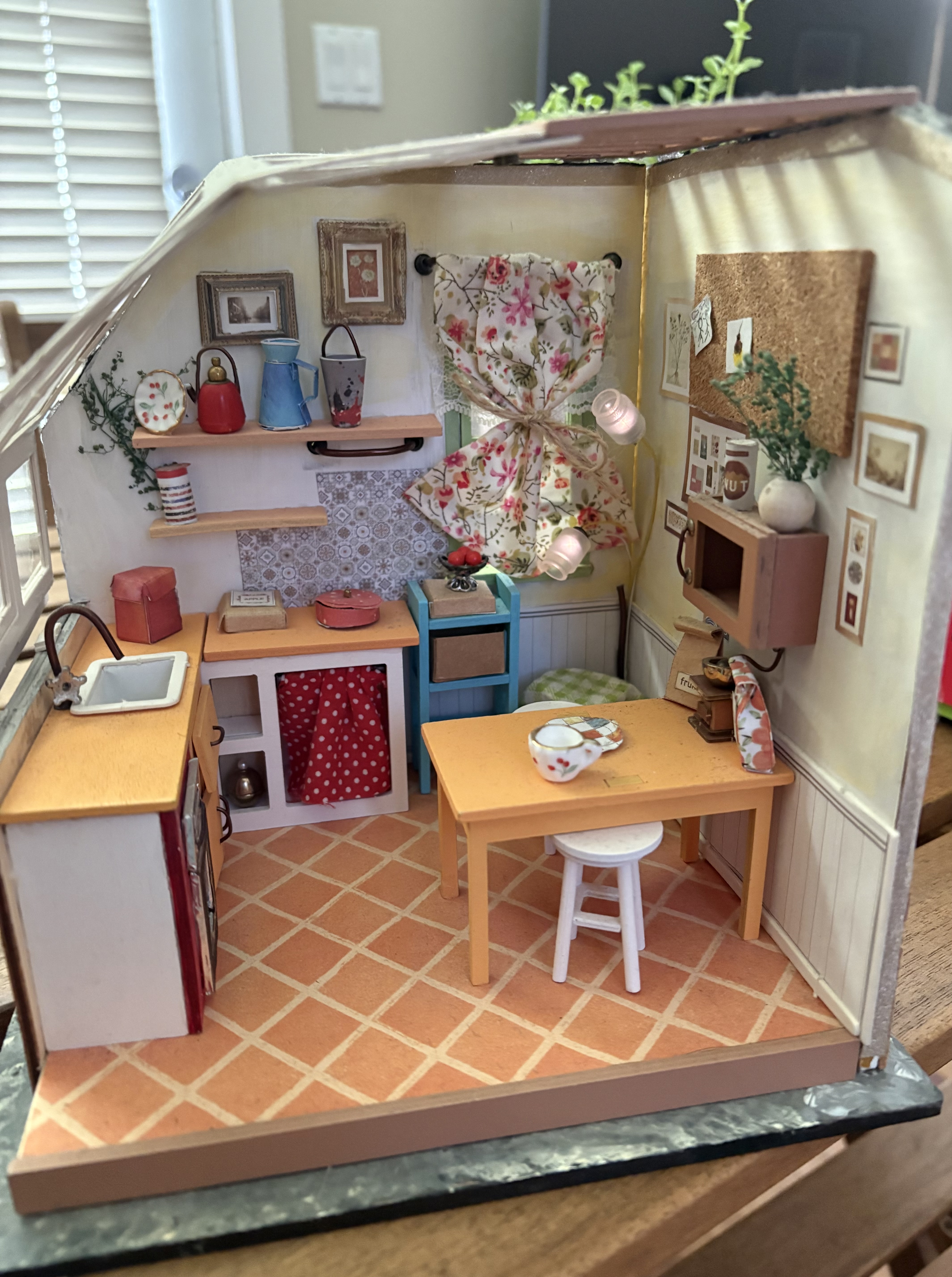
These tiny projects became a kind of relief during those difficult times. Each small block was visible. Each piece existed. And when I brought them together, they became something larger. A little house, a small world, proof that I am able to create something.
I felt not only crafty, but also a little techy. You can see my little lamp floor working here. It was supposed to be a ceiling lamp, but I messed it up, so I will need to recreate it. Still, even that feels fitting. Some things do not become what they were supposed to become, but they still light up.
I wonder whether everyone feels this way sometimes. No outcome can feel like no work. I know that is not true, but I still struggle with it. There are many lessons I am still learning, about patience, process, failure, repair, and the quiet value of things that take time to become visible.
Motivating the motif
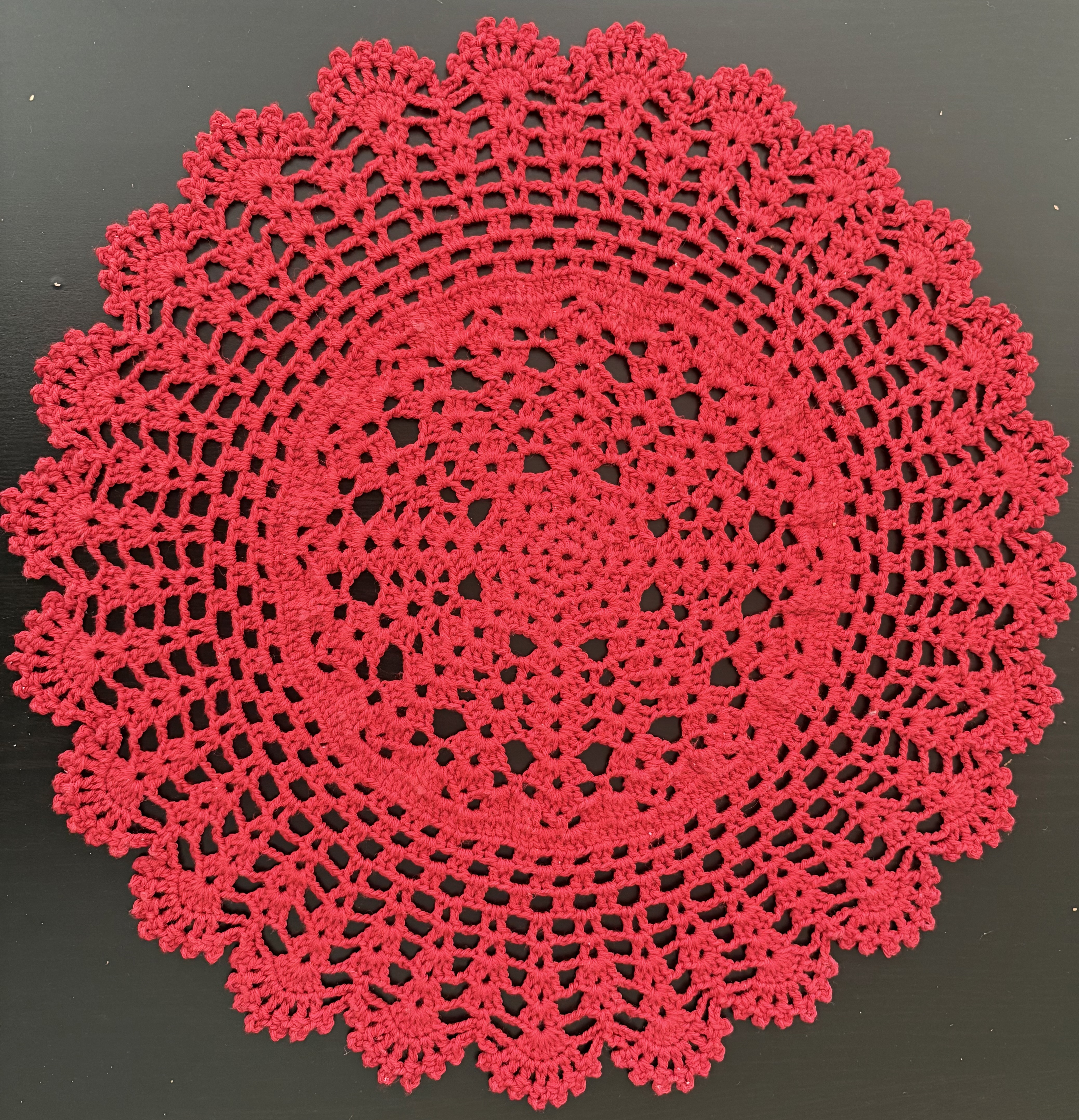
A single stitch, then another. Repeat the same one, or tweak it slightly. A few loops later, it may become a flower. A few flowers may begin to look like a circle. Repeat the process enough times, and a pattern emerges. Here is your motif.
It sounds a little like language. Sounds become words, words become sentences, and small repeated choices begin to make something larger. Some patterns are regular, some shift slightly. The pattern is not always obvious while it is being made. Sometimes it only appears when one steps back and looks at the whole thing. What looks like a series of tiny loops may turn out to have been a structure all along.